










21 Sep 2026
Decoding Omega 3 Supplements: From 'Pure' to 'High Strength'
The best Omega 3 supplement isn’t the one with the boldest “pure” or “high strength” claim, but the one that delivers meaningful EPA and DHA in a high-quality formulation
that fits intelligently into your wider longevity routine.
6 MIN READ
In This Article
- “Omega 3”: Understanding the Difference Between ALA, EPA and DHA
- Omega 3 Benefits: What the Evidence Actually Supports
- Why Omega 3 Becomes Non-Negotiable in Perimenopause
- The Omega 3 Supplement Spectrum: From “Pure” to “High Strength”
- Why “High Strength Omega 3” Is Often Misunderstood
- How to Choose the Best Omega 3 Supplement for Your Goals
- Why Omega 3 Alone Isn’t Enough (And What Most Brands Miss)
- A Smarter Approach: Building Omega 3 Into a Complete Longevity System
- Our recommendation: Stop Guessing - Start Using Omega 3 Strategically
- Frequently Asked Questions
“Omega 3”: Understanding the Difference Between ALA, EPA and DHA
Omega 3 is not a single nutrient: it is a family of fatty acids, and the form you consume determines what your body can do with it.
A family of healthy fats, Omega 3 has three main types you are likely to encounter:
ALA (alpha-linolenic acid), EPA (eicosapentaenoic acid), and DHA (docosahexaenoic acid).
All three have different structures and play different roles in the body (Van Dael, 2021). ALA is an essential fatty acid, meaning your body cannot make it and you need to get it through your diet. It is found mainly in plant foods such as flax, chia and walnuts and can be converted by the body into the longer-chain Omega 3s EPA and DHA (Van Dael, 2021). EPA is involved in producing signalling molecules that help regulate processes such as inflammation, while DHA is an important building block of cell membranes, particularly in the brain and eyes (Van Dael, 2021).
ALA Conversion inefficiency
This is why EPA and DHA are often described as the “active” forms of Omega 3: your body can use them directly, whereas ALA must first be converted into EPA and DHA. That conversion is limited, particularly for DHA (Burdge, 2006). Estimates vary, but one major review suggests that around 8–12% of ALA is converted to EPA while less than 1% of ALA is converted to DHA (Burdge, 2006).
Omega 3 Benefits: What the Evidence Actually Supports
Omega 3 has accumulated an impressive list of supposed benefits, but some claims stand on much firmer scientific ground than others.
Heart health: triglycerides, cardiovascular support
The clearest evidence concerns triglycerides. A 2023 meta-analysis of 90 randomized controlled trials found an approximately linear relationship between EPA/DHA intake and reductions in triglycerides, with particularly evident effects at doses above 2g per day (Wang et al., 2023). Cardiovascular outcomes are more complicated: large meta-analyses suggest modest benefits for some endpoints, but results vary according to dose and whether EPA is used alone or alongside DHA.

Brain function: cognition, mood regulation
The brain is another logical focus because DHA is an important component of neuronal membranes. Yet “supports brain health” should not be translated into “makes you smarter”. A systematic review and meta-analysis of randomized trials found no general improvement in cognitive performance, although there was some evidence of improved short-term memory among people with low Omega 3 status (Cooper et al., 2015). Research into mood is similarly nuanced rather than universally positive.
Inflammation: systemic vs chronic low-grade
Omega 3s also interact with the inflammatory response. An umbrella meta-analysis of 32 meta-analyses reported reductions in inflammatory biomarkers including CRP, TNF-α and IL-6 following supplementation (Kavyani et al., 2022). That matters because inflammation is a normal and necessary biological process; the more relevant question is how effectively the body regulates and resolves it.
Skin and aging: barrier function, hydration, elasticity
For skin, human studies suggest EPA and DHA can alter inflammatory lipid signalling within the skin, including following UV exposure, but evidence for sweeping claims about hydration, elasticity or reversing aging remains much less established.
Hormonal support: relevance for perimenopause
And during perimenopause? This is where marketing can outrun the evidence. Omega 3s are biologically interesting during the menopausal transition, but reviews examining hot flushes, mood and cognition describe the findings as heterogeneous and inconclusive. They may have a place in a well-designed nutritional routine, but they should not be presented as a proven treatment for perimenopausal symptoms.
Our Morning & Night Female formula is suspended in omega-3 rich flaxseed oil.
The supplement works with your changing hormones to keep you feeling like you.
Why Omega 3 Becomes Non-Negotiable in Perimenopause
Perimenopause is not simply the countdown to your final period. Fluctuating and eventually declining oestrogen can coincide with changes across the brain, skin and cardiovascular system — which helps explain why a routine that worked perfectly well in your thirties may deserve another look in your forties.
Inflammation is part of that picture, although the relationship is more complex than “less oestrogen equals more inflammation”. A large longitudinal study following women across the menopause transition found that some groups experienced rises in inflammatory markers including hs-CRP and IL-6 around their final menstrual period (El Khoudary et al., 2025). Omega 3 is relevant here because EPA and DHA participate in pathways involved in regulating inflammatory responses — but that does not make Omega 3 a treatment for menopausal inflammation.
Difficulty concentrating, forgetfulness, sleep disruption and mood changes are commonly reported during the menopausal transition, according to a recent clinical review (Williams and Maki, 2025). Evidence that Omega 3 supplementation directly fixes these symptoms, however, remains mixed (Decandia et al., 2022).
Skin changes are less ambiguous: declining oestrogen is associated with reductions in collagen, elasticity and moisture, contributing to thinner, drier skin (Viscomi et al., 2025). Cardiovascular health also becomes increasingly important, with the menopause transition coinciding with changes in blood pressure, lipoproteins, insulin resistance and body composition, while cardiovascular risk rises notably during the fifth decade (Uddenberg et al., 2024).
So “foundational” is a better word than “miracle”. Omega 3 cannot rebalance hormones or erase perimenopausal symptoms — and a 2023 systematic review found insufficient evidence that supplementation improves vasomotor symptoms, sleep or depression overall (Iqbal et al., 2023). Instead, think of EPA and DHA as nutrients worth considering within a broader midlife nutrition strategy — particularly when the goal is to support long-term health rather than chase a quick fix.
The Omega 3 Supplement Spectrum: From “Pure” to “High Strength”
Walk down a supplement aisle and Omega 3 quickly becomes a vocabulary test: pure, premium, concentrated, high strength. The problem is that the most impressive word on the front of the bottle may tell you surprisingly little about what is inside.
“Pure”, for example, is not a useful measure of Omega 3 potency on its own. “High strength” is more meaningful when it translates into a genuinely higher concentration of EPA and DHA. That distinction matters because products containing similar quantities of fish oil can deliver very different amounts of these fatty acids. A study examining 255 commonly available Omega 3 supplements found substantial variation in EPA and DHA doses, with a median combined dose of 600mg per day (Assadourian et al., 2023).
Triglyceride vs ethyl ester forms and bioavailability differences
There is another detail hiding behind the milligrams: chemical form. EPA and DHA in supplements can be supplied in forms including natural or re-esterified triglycerides (TG/rTG) and ethyl esters (EE). These are structurally different ways of carrying the same fatty acids, and research suggests they can behave differently during digestion and absorption. A recent comprehensive review found that re-esterified triglycerides generally showed greater bioavailability than ethyl esters, although importantly, short-term differences in absorption do not always translate into meaningful differences during long-term supplementation (Alijani et al., 2025).
So don’t judge an Omega 3 by the biggest number or boldest adjective on its label. Start with three questions: How much EPA and DHA am I actually getting? In what form? And does the formulation suit what I want from it?
That is the difference between buying the marketing claim and understanding the supplement.

Why “High Strength Omega 3” Is Often Misunderstood
“High strength” sounds reassuringly precise. In reality, the number that deserves your attention is not necessarily the biggest one on the bottle.
A softgel labelled 1,000mg fish oil, for example, does not automatically provide 1,000mg of Omega 3. Fish oil is the carrier, and EPA and DHA are the figures to look for. This distinction matters because supplement formulations vary considerably in the amounts they provide. An analysis of 255 fish-oil supplements found a median labelled daily dose of just 600mg combined EPA and DHA, despite substantial variation between products (Assadourian et al., 2023).
But a higher EPA+DHA number does not automatically make one supplement “better”. Dose, formulation and absorption are separate pieces of the puzzle. Triglyceride and re-esterified triglyceride forms can have higher bioavailability than ethyl esters under some conditions, although all can increase EPA and DHA levels in the body. Absorption can also depend on what you eat alongside them: ethyl-ester Omega 3s appear to be absorbed less efficiently with a low-fat meal than with a higher-fat meal.
The useful habit, then, is to turn the bottle around. Ignore vague front-label language such as maximum strength, premium or ultra until you have checked the EPA and DHA per recommended daily serving, the chemical form and the serving size required to reach that amount.
Think of “high strength” as a headline. The supplement facts are the small print that tells you whether the headline is deserved.
The Quality Markers That Separate Good from Exceptional Omega 3
Once you look beyond “high strength”, quality becomes less about one impressive number and more about what happened to the oil before it reached the softgel.
| Quality marker | What to look for | Why it matters |
|---|---|---|
| EPA to DHA ratio | A label that clearly states the amount of both EPA and DHA. | EPA and DHA have different biological roles. There is no single “ideal” ratio for everyone, so transparency matters more than one headline number. |
| Oxidation (TOTOX) | Evidence that the oil is protected from oxidation and meets recognized quality limits. | Omega 3 oils are vulnerable to oxidation. TOTOX combines measures of primary and secondary oxidation to help assess overall oxidative quality (Albert et al., 2013). One study found that 50% of tested supplements exceeded voluntary limits for at least one oxidation marker (Jackowski et al., 2015). |
| Source quality | Traceable sourcing, responsible fisheries and transparent manufacturing. | “Wild-caught” does not automatically mean nutritionally superior. Look for evidence of where and how the Omega 3 was sourced instead. |
| Delivery format | A format designed to help protect the oil during storage. | Encapsulation can help protect Omega 3 oils from oxidation, but a softgel alone does not guarantee quality (Yenipazar and Şahin-Yeşilçubuk, 2023). |
| Third-party testing | Independent testing for EPA/DHA content, oxidation and contaminants, ideally with results the brand will share. | Testing provides more meaningful evidence of quality than premium packaging or marketing claims. Verifiable quality is harder to fake. |
How to Choose the Best Omega 3 Supplement
for Your Goals
There is no universal “best” Omega 3 supplement. The smarter question is: best for what?
If focus and cognitive performance are your priority, don’t assume that more DHA — or simply more Omega 3 — guarantees sharper thinking. Trials remain mixed: a 2023 review of 78 randomized controlled trials found positive cognitive outcomes in fewer than half, with substantial differences between populations, doses and study designs (Andriambelo et al., 2023). In other words, be wary of products promising a mental upgrade from EPA or DHA alone.
For perimenopause, the same reality check applies. Omega 3 should not be sold as something that “balances hormones”. A systematic review found insufficient evidence that supplementation improves menopausal hot flushes, sleep or overall quality of life (Mohammady et al., 2018).
If skin and healthy aging are your focus, prioritize overall product quality rather than chasing beauty claims: meaningful EPA/DHA content, low oxidation, traceable sourcing and independent testing.
And for long-term health, consider Omega 3 as one component of the bigger nutritional picture. Research suggests supplementation can influence inflammatory biomarkers such as CRP, TNF-α and IL-6, although results are not uniform across populations and studies (Kavyani et al., 2022).
The simplest decision tree? Define your goal → check the evidence → compare EPA and DHA → assess quality → choose the formulation. Not the other way around.
Why Omega 3 Alone Isn’t Enough
(And What Most Brands Miss)
Nutrient synergy
Omega 3 can be valuable, but nutrition rarely operates as a one-ingredient-at-a-time system. EPA and DHA sit within a much larger network of Vitamins, Minerals, Amino Acids and other nutrients, each supporting different biological processes. In one randomized controlled trial, for example, researchers found different changes in cardiovascular biomarkers when Omega 3 and a multivitamin were taken individually or together — a useful reminder that nutrients can have complementary, rather than identical, roles (Earnest et al., 2012).
Timing and circadian biology (morning vs night needs)
There is another dimension most supplement labels barely acknowledge: time. Human physiology follows approximately 24-hour circadian rhythms, with metabolic processes including nutrient handling and energy balance varying across the day. A 2022 review explains how peripheral clocks in tissues including the liver, muscle and adipose tissue contribute to daily rhythms in metabolism, while nutritional timing can interact with those rhythms (Smith and Betts, 2022).
That does not mean science has established a universal rule that one supplement belongs in the morning and another at night. Chrononutrition remains an evolving field, with important gaps in the human evidence. But it does challenge the idea that better supplementation simply means adding another standalone bottle. A more considered approach starts with the whole routine: what nutrients you need, how they complement one another and how consistently they fit into your day.
Introduce the concept of a foundational daily stack
Think less “hero ingredient”; more supporting cast. That is the logic behind building a foundational daily stack rather than an ever-growing cupboard of isolated supplements.

A Smarter Approach: Building Omega 3 Into a Complete Longevity System
The smartest Omega 3 routine may not start with asking, “Which fish oil should I buy?” It starts with a broader question: what does the rest of my daily nutrition already cover?
Omega 3 is one part of that picture. Vitamins, Minerals, Amino Acids and other nutrients have distinct physiological roles, which is why an integrated formulation can be a practical alternative to assembling an increasingly complicated collection of individual supplements. Importantly, “more ingredients” does not automatically mean better results; formulation, appropriate doses and the evidence behind individual nutrients still matter.
There is also growing scientific interest in when we consume nutrition. Chrononutrition research examines the relationship between nutritional timing, circadian rhythms and metabolic health. A 2024 academic review describes this as a rapidly developing field, while emphasising that larger and longer randomized trials are still needed (Raji et al., 2024).
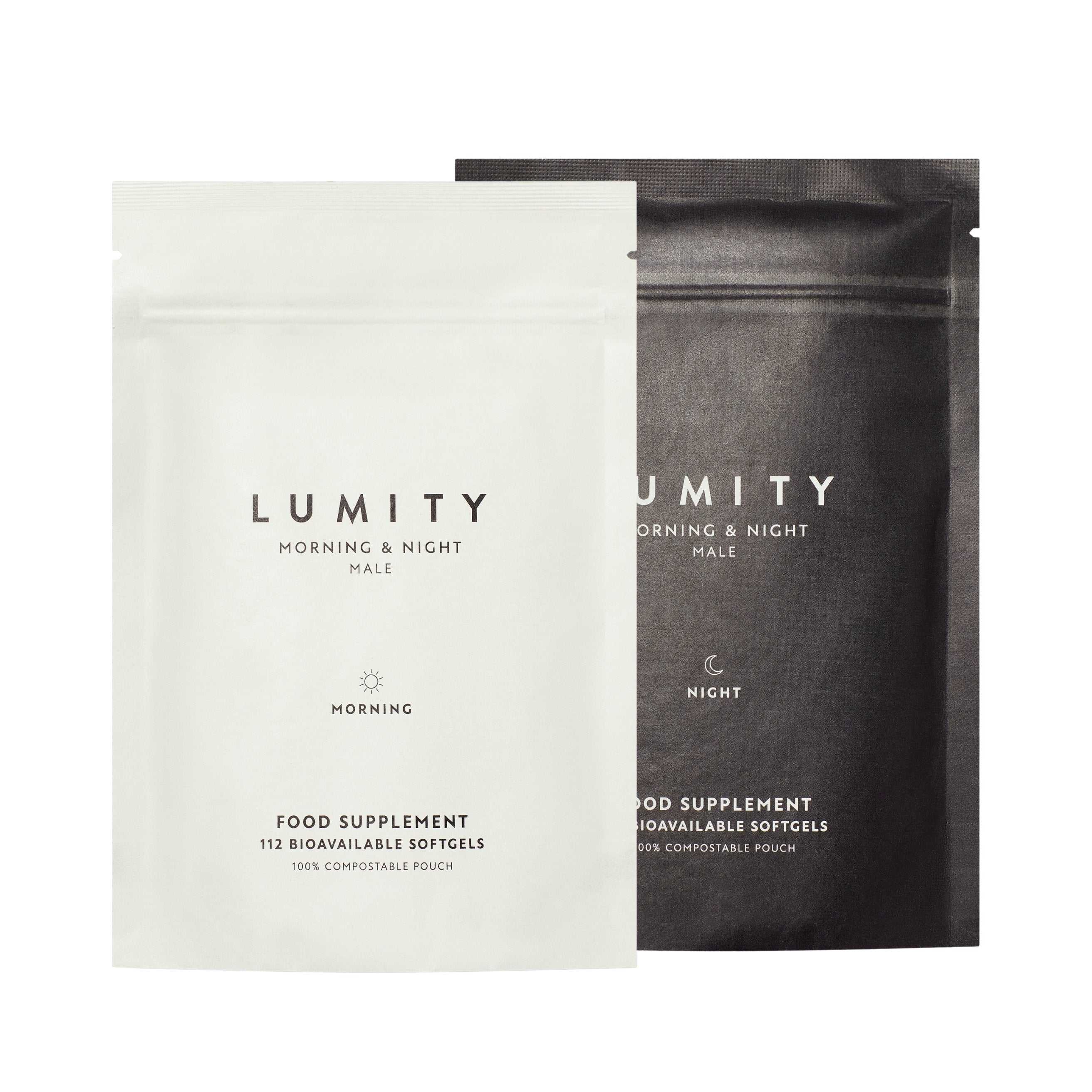
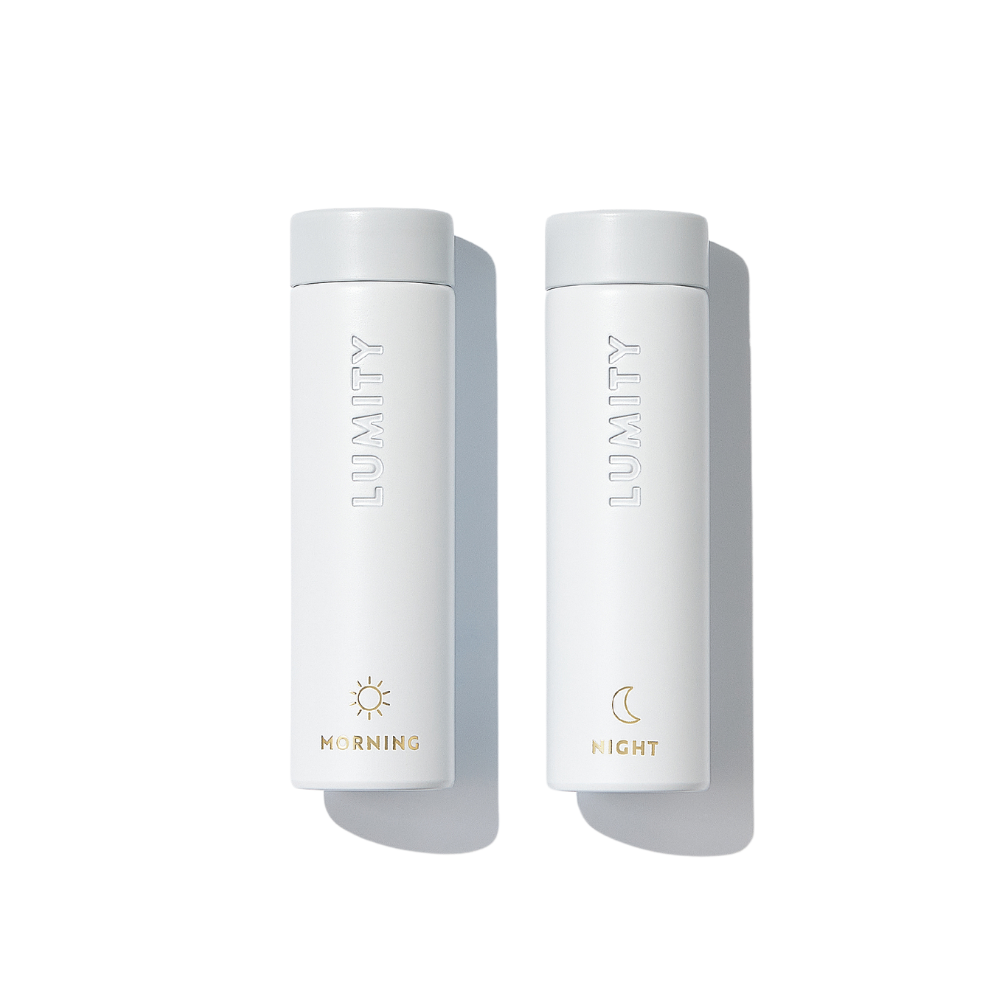
This is the thinking behind Lumity Morning & Night: a clinically tested, 24-hour formulation designed with the body’s circadian rhythm in mind, rather than another standalone bottle competing for space in your cupboard.
The practical advantage is simplicity. Instead of treating Omega 3 as the latest ingredient to bolt onto an already fragmented routine, it becomes part of a consistent morning-and-night system.
Because the best supplement routine is not necessarily the one with the most bottles. It is the one you can understand, trust and actually stick to.
Ready to simplify your supplement routine? Discover Lumity Morning & Night, a clinically tested formulation designed with your body’s circadian rhythm in mind - bringing complementary nutrients into one simple morning-and-night routine.
Our recommendation: Stop Guessing - Start Using Omega 3 Strategically
Choosing Omega 3 should not require a degree in nutritional biochemistry. But it does require looking past the marketing.
Instead of being swayed by pure, premium or high strength, turn the bottle around. Check the EPA and DHA per daily serving, consider the formulation and look for evidence of responsible sourcing and independent quality testing. That label check matters: an analysis of 255 commonly available supplements found considerable variation in EPA and DHA content, with combined daily doses ranging widely between products (Assadourian et al., 2023).
Most importantly, choose Omega 3 according to your goals rather than assuming the largest milligram figure must be best. More is not automatically better; context, formulation and evidence matter.
And if your supplement shelf is starting to resemble a chemistry lab, consider the bigger picture. Rather than continually adding isolated ingredients, a clinically tested system such as Lumity Morning & Night, designed with the body’s 24-hour circadian rhythm in mind, offers a simpler way to build Omega 3 into a broader daily routine.
Stop collecting supplements. Start building a strategy.
Frequently Asked Questions
What’s the difference between ALA, EPA and DHA?
ALA is plant-based, while EPA and DHA are the forms more readily used by the body.
What are the main benefits of Omega 3?
Omega 3 is best known for supporting healthy triglyceride levels.
Is Omega 3 good for perimenopause?
It can support a balanced midlife diet, but it isn’t proven to treat perimenopause symptoms.
What does “high strength” Omega 3 mean?
It usually refers to how much EPA and DHA a supplement provides.
How do I know if an Omega 3 is really high strength?
Check the EPA and DHA amounts, not just the total fish oil.
What makes a good Omega 3 supplement?
Look for clear EPA/DHA levels, quality testing and traceable sourcing.
Which Omega 3 supplement should I choose?
Choose one that matches your goals, with clearly stated EPA and DHA levels.
Can I take Omega 3 with other supplements?
Yes, Omega 3 can be part of a wider daily supplement routine.
How does Omega 3 fit into a longevity routine?
Think of it as one part of a balanced, consistent approach to healthy aging.
What should I look for when buying Omega 3?
Focus on EPA/DHA content, quality, sourcing and testing—not marketing buzzwords.
Sources
Albert, B.B., Cameron-Smith, D., Hofman, P.L. and Cutfield, W.S. (2013) ‘Oxidation of marine omega-3 supplements and human health’, BioMed Research International, 2013, 464921. Available at: https://pmc.ncbi.nlm.nih.gov/articles/PMC3657456/ (Accessed: 7 September 2026).
Alijani, S., Hahn, A., Harris, W.S. and Schuchardt, J.P. (2025) ‘Bioavailability of EPA and DHA in humans – A comprehensive review’, Progress in Lipid Research, 97, 101318. Available at: https://pubmed.ncbi.nlm.nih.gov/39736417/ (Accessed: 7 September 2026).
Andriambelo, B., Stiffel, M., Roke, K. and Plourde, M. (2023) ‘New perspectives on randomized controlled trials with omega-3 fatty acid supplements and cognition: A scoping review’, Aging Research Reviews, 85, 101835. Available at: https://pubmed.ncbi.nlm.nih.gov/36603691/ (Accessed: 7 September 2026).
Assadourian, J.N., Peterson, E.D., McDonald, S.A., Gupta, A. and Navar, A.M. (2023) ‘Health claims and doses of fish oil supplements in the US’, JAMA Cardiology, 8(10), pp. 984–988. Available at: https://pubmed.ncbi.nlm.nih.gov/37610733/ (Accessed: 7 September 2026).
Burdge, G.C. (2006) ‘Metabolism of alpha-linolenic acid in humans’, Prostaglandins, Leukotrienes and Essential Fatty Acids, 75(3), pp. 161–168. Available at: https://pubmed.ncbi.nlm.nih.gov/16828546/ (Accessed: 7 September 2026).
Burdge, G.C. and Wootton, S.A. (2002) ‘Conversion of alpha-linolenic acid to eicosapentaenoic, docosapentaenoic and docosahexaenoic acids in young women’, British Journal of Nutrition, 88(4), pp. 411–420. Available at: https://pubmed.ncbi.nlm.nih.gov/12323090/ (Accessed: 7 September 2026).
Cooper, R.E., Tye, C., Kuntsi, J., Vassos, E. and Asherson, P. (2015) ‘Omega-3 polyunsaturated fatty acid supplementation and cognition: A systematic review and meta-analysis’, Journal of Psychopharmacology, 29(7), pp. 753–763. Available at: https://pubmed.ncbi.nlm.nih.gov/26040902/ (Accessed: 7 September 2026).
Decandia, D., Landolfo, E., Sacchetti, S., Gelfo, F., Petrosini, L. and Cutuli, D. (2022) ‘n-3 PUFA improve emotion and cognition during menopause: A systematic review’, Nutrients, 14(9), 1982. Available at: https://pubmed.ncbi.nlm.nih.gov/35565948/ (Accessed: 7 September 2026).
Dyall, S.C. (2015) ‘Long-chain omega-3 fatty acids and the brain: A review of the independent and shared effects of EPA, DPA and DHA’, Frontiers in Aging Neuroscience, 7, 52. Available at: https://pmc.ncbi.nlm.nih.gov/articles/PMC4404917/ (Accessed: 7 September 2026).
Earnest, C.P., Kupper, J.S., Thompson, A.M., Guo, W. and Church, T. (2012) ‘Complementary effects of multivitamin and omega-3 fatty acid supplementation on indices of cardiovascular health in individuals with elevated homocysteine’, International Journal for Vitamin and Nutrition Research, 82(1), pp. 41–52. Available at: https://pubmed.ncbi.nlm.nih.gov/22811376/ (Accessed: 7 September 2026).
El Khoudary, S.R. et al. (2025) ‘The relation between systemic inflammation and the menopause transition: The Study of Women’s Health Across the Nation’, Journal of Clinical Endocrinology & Metabolism, 110(11), pp. e3566–e3576. Available at: https://pubmed.ncbi.nlm.nih.gov/40123296/ (Accessed: 7 September 2026).
Iqbal, A.Z., Wu, S-K., Zailani, H., Chiu, W-C., Liu, W-C., Su, K-P. and Lee, S-D. (2023) ‘Effects of omega-3 polyunsaturated fatty acids intake on vasomotor symptoms, sleep quality and depression in postmenopausal women: A systematic review’, Nutrients, 15(19), 4231. Available at: https://pubmed.ncbi.nlm.nih.gov/37836515/ (Accessed: 7 September 2026).
Jackowski, S.A., Alvi, A.Z., Mirajkar, A., Imani, Z., Gamalevych, Y., Shaikh, N.A. and Jackowski, G. (2015) ‘Oxidation levels of North American over-the-counter n-3 (omega-3) supplements and the influence of supplement formulation and delivery form on evaluating oxidative safety’, Journal of Nutritional Science, 4, e30. Available at: https://pubmed.ncbi.nlm.nih.gov/26688721/ (Accessed: 7 September 2026).
Kavyani, Z., Musazadeh, V., Fathi, S., Faghfouri, A.H., Dehghan, P. and Sarmadi, B. (2022) ‘Efficacy of the omega-3 fatty acids supplementation on inflammatory biomarkers: An umbrella meta-analysis’, International Immunopharmacology, 111, 109104. Available at: https://pubmed.ncbi.nlm.nih.gov/35914448/ (Accessed: 7 September 2026).
Mohammady, M., Janani, L., Jahanfar, S. and Mousavi, M.S. (2018) ‘Effect of omega-3 supplements on vasomotor symptoms in menopausal women: A systematic review and meta-analysis’, European Journal of Obstetrics & Gynecology and Reproductive Biology, 228, pp. 295–302. Available at: https://pubmed.ncbi.nlm.nih.gov/30056356/ (Accessed: 7 September 2026).
Raji, O.E., Kyeremah, E.B., Sears, D.D., St-Onge, M-P. and Makarem, N. (2024) ‘Chrononutrition and cardiometabolic health: An overview of epidemiological evidence and key future research directions’, Nutrients, 16(14), 2332. Available at: https://pubmed.ncbi.nlm.nih.gov/39064774/ (Accessed: 7 September 2026).
Smith, H.A. and Betts, J.A. (2022) ‘Nutrient timing and metabolic regulation’, The Journal of Physiology, 600(6), pp. 1299–1312. Available at: https://pubmed.ncbi.nlm.nih.gov/35038774/ (Accessed: 7 September 2026).
Uddenberg, E.R., Safwan, N., Saadedine, M., Hurtado, M.D., Faubion, S.S. and Shufelt, C.L. (2024) ‘Menopause transition and cardiovascular disease risk’, Maturitas, 185, 107974. Available at: https://pubmed.ncbi.nlm.nih.gov/38555760/ (Accessed: 7 September 2026).
Van Dael, P. (2021) ‘Role of n-3 long-chain polyunsaturated fatty acids in human nutrition and health: Review of recent studies and recommendations’, Nutrition Research and Practice, 15(2), pp. 137–159. Available at: https://pmc.ncbi.nlm.nih.gov/articles/PMC8007408/ (Accessed: 7 September 2026).
Viscomi, B., Muniz, M. and Sattler, S. (2025) ‘Managing menopausal skin changes: A narrative review of skin quality changes, their aesthetic impact, and the actual role of hormone replacement therapy in improvement’, Journal of Cosmetic Dermatology, 24(Suppl. 4), e70393. Available at: https://pubmed.ncbi.nlm.nih.gov/40847905/ (Accessed: 7 September 2026).
Wang, T., Zhang, X., Zhou, N., Shen, Y., Li, B., Chen, B.E. and Li, X. (2023) ‘Association between omega-3 fatty acid intake and dyslipidemia: A continuous dose-response meta-analysis of randomized controlled trials’, Journal of the American Heart Association, 12(11), e029512. Available at: https://pubmed.ncbi.nlm.nih.gov/37264945/ (Accessed: 7 September 2026).
Williams, M. and Maki, P.M. (2025) ‘A review of cognitive, sleep, and mood changes in the menopausal transition: Beyond vasomotor symptoms’, Obstetrics & Gynecology, 146(3), pp. 350–359. Available at: https://pubmed.ncbi.nlm.nih.gov/40403308/ (Accessed: 7 September 2026).
Yenipazar, H. and Şahin-Yeşilçubuk, N. (2023) ‘Effect of packaging and encapsulation on the oxidative and sensory stability of omega-3 supplements’, Food Science & Nutrition, 11(3), pp. 1426–1440. Available at: https://pubmed.ncbi.nlm.nih.gov/36911843/ (Accessed: 7 September 2026).
Read more

Mood regulation refers to the process by which individuals manage and control their emotions and moods. It involves the ability to recognize, understand, and influence one's own emotional states in...
Read more
Which Nutrients Support Natural Daily Energy? A Guide to Vitamins, Minerals & Amino Acids
What really supports natural daily energy? Discover the science behind Vitamins, Minerals, Amino Acids and essential fats, including which nutrients support normal energy metabolism, how to assess ...
Read more