





25 November 2026
The Science Behind Lumity: Clinical Research on the Morning & Night Formula
5 MIN READ
In This Article
- Has Lumity's Morning & Night Formula Been Clinically Tested?
- What Did Lumity's Clinical Trial Find?
- How Does the Clinical Research Relate to the Upgraded Lumity Morning & Night Formula?
- Why Does Magnesium Matter in Lumity's Morning & Night Formula?
- How Does Morning & Night Compare With Other Premium Supplements?
- What Should UK Consumers Look for in a Science-Backed Supplement?
- The Value of Clinical Evidence in Everyday Supplement Choices
- Frequently Asked Questions FAQs
Has Lumity's Morning & Night Formula Been Clinically Tested?
When it comes to choosing a premium supplement, impressive ingredient lists are only part of the picture. The more important question is whether the finished formula has been scientifically evaluated. At Lumity, we've taken that step. Our core Morning & Night formula was investigated in a 2019 randomized, double-blind, placebo-controlled clinical study, published in the Journal of Clinical and Aesthetic Dermatology. The research examined whether our carefully formulated combination of nutrients could support skin appearance and aspects of everyday wellbeing. Unlike studies examining individual vitamins or minerals in isolation, this research investigated Lumity's combined Morning & Night supplement regimen, providing product-specific evidence for the formula.

Inside Lumity's Clinical Trial
Led by dermatologist Dr Zoe Diana Draelos, the 12-week clinical study (Draelos, 2019) enrolled 50 women aged 35–65 with mild-to-moderate signs of skin photoaging.
Participants were randomly assigned to receive either Lumity's Morning & Night supplements or an identical-looking placebo. They took three morning and three evening supplements daily, with assessments conducted at baseline and throughout the study. Researchers evaluated skin firmness, hydration, wrinkles and overall appearance, alongside participant-reported measures of sleep, energy and wellbeing.
The study reported statistically significant improvements in several skin appearance measures compared with placebo, providing encouraging clinical evidence for the tested formula.
Why Randomisation, Blinding and Placebo Controls Matter
Not all supplement research carries the same scientific weight. According to clinical trial reporting guidance (Schulz, Altman and Moher, 2010), the following study design features help reduce potential bias:
- Randomisation helps distribute participant differences between groups.
- Double-blinding means neither participants nor investigators know who receives the active supplement.
- Placebo controls help distinguish effects associated with the supplement from expectations or unrelated changes.
Together, these features make Lumity's 2019 findings more informative than testimonials or ingredient research alone. And because our core Morning & Night formula remains unchanged, the study continues to provide relevant evidence for the formulation at the heart of today's products.
What Did Lumity's Clinical Trial Find?
The results of Lumity's 2019 clinical study, published in the Journal of Clinical and Aesthetic Dermatology (Draelos, 2019), offer evidence that targeted nutritional supplementation can support skin appearance and everyday wellbeing. Researchers combined dermatologist assessments, participant feedback and objective measurements to evaluate the Morning & Night formula over 12 weeks
Skin Hydration, Fine Lines and Visible Skin Characteristics
By Week 8, the dermatologist observed statistically significant improvements in several skin characteristics compared with placebo:
- Skin hydration: p < 0.001
- Skin firmness: p = 0.035
- Reduced dullness: p < 0.001
- Overall skin appearance: p = 0.010
These improvements continued through Week 12.
Researchers also used laser-scanned silicone replicas of the crow's-feet area to examine wrinkle structure. By Week 12, the Lumity group demonstrated a statistically significant reduction in wrinkle breadth (Draelos, 2019) compared with placebo (p = 0.018). Although instrumental skin hydration measurements did not show a significant difference between groups, the dermatologist's assessments and participants' own evaluations supported improvements in perceived hydration and appearance.
Sleep, Energy and Wellbeing
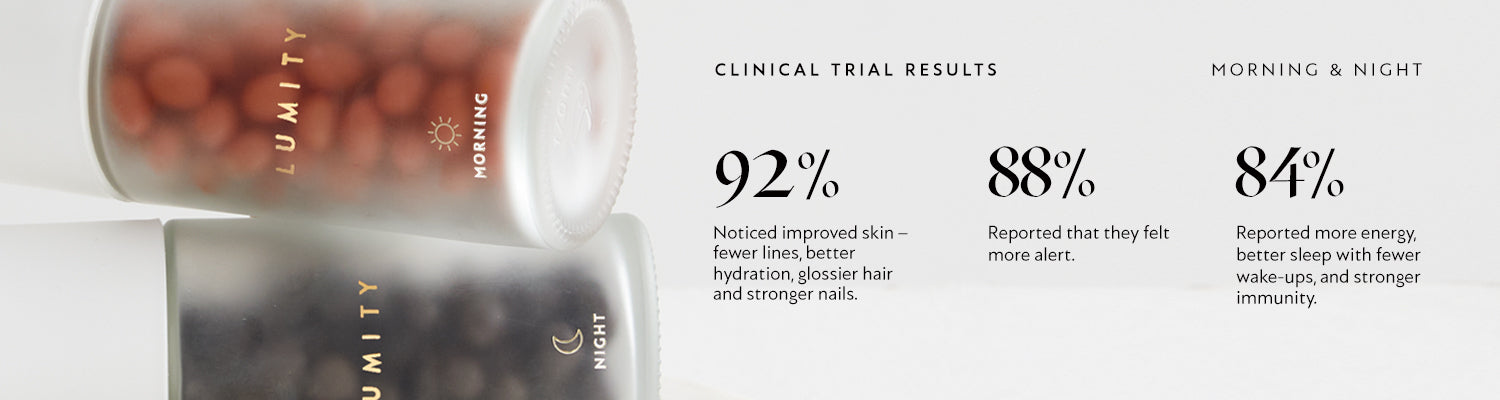
The study also explored benefits beyond skin appearance. By Week 8, participants taking Lumity reported significantly better outcomes than the placebo group for:
- Energy levels: p = 0.020
- Sleep quality: p = 0.010
- Fewer daytime energy slumps: p = 0.018
- Positive outlook: p = 0.010
These findings suggest that participants experienced benefits extending beyond visible skin changes.
How Does the Clinical Research Relate to the Upgraded Lumity Morning & Night Formula?
At Lumity, our approach has always been to build on a scientifically informed foundation. While Morning & Night has evolved, the core formulation investigated in our 2019 published clinical study (Draelos, 2019) remains at the heart of today's supplement. This means the published findings remain relevant to the foundational nutrient combination used in today's product. Rather than relying solely on studies of individual ingredients, we can point to research investigating how our core formula performed as a complete supplement regimen.
Understanding Subsequent Ingredient Additions
Scientific progress doesn't stand still, and neither does our nutritional formulation. In 2025, we introduced several carefully considered enhancements to Morning & Night, including:
- Magnesium Malate: An updated form of Magnesium, a mineral that contributes to normal energy-yielding metabolism and muscle function.
- Calcium L-5-Methyltetrahydrofolate: An active form of Folate, replacing conventional Folic Acid.
- Lutein: A carotenoid investigated for its role in eye health.
- Glycine: An amino acid involved in several physiological processes, including Glutathione synthesis.
The addition of these enhancements reflects our commitment to preserving an established clinical foundation while continuing to refine Morning & Night as nutritional science advances.
Why Does Magnesium Matter in Lumity's Morning & Night Formula?
Magnesium is an essential mineral involved in hundreds of biochemical reactions, making it an important component of Lumity's comprehensive Morning & Night approach to everyday wellbeing.
Magnesium's Role in Normal Energy Metabolism and Muscle Function
Magnesium contributes to normal energy-yielding metabolism, muscle function and the reduction of tiredness and fatigue. According to the National Institutes of Health (NIH Office of Dietary Supplements, n.d.), Magnesium supports more than 300 enzyme systems, including those involved in energy production, protein synthesis and nerve signalling. For women navigating busy schedules and changing nutritional needs, maintaining adequate Magnesium intake is an important part of supporting normal physiological function.
Magnesium Malate vs Glycinate, Citrate and Oxide
Not all Magnesium supplements use the same chemical form, and these differences can influence absorption.
- Magnesium Malate: Combines Magnesium with malic acid. Research into its comparative absorption is still developing.
- Magnesium Glycinate: Binds Magnesium to the amino acid Glycine and is commonly marketed for tolerability.
- Magnesium Citrate: Has demonstrated greater bioavailability than Magnesium Oxide in a randomized clinical study (Walker et al., 2003).
- Magnesium Oxide: Provides a high proportion of elemental Magnesium but generally shows lower absorption than more soluble forms.
A2021 systematic review (Pardo et al., 2021) found that organic Magnesium compounds generally demonstrated better bioavailability than inorganic forms, although absorption also depends on dosage and individual circumstances.

Which Form of Magnesium Does Lumity Use?
Lumity's updated Morning & Night for Women formula features Magnesium Malate, selected as part of our ongoing commitment to thoughtful ingredient development. Magnesium Malate combines an essential mineral with malic acid, a compound involved in cellular metabolism. By retaining our clinically studied core formula while refining individual ingredients, we continue to bring together established nutritional science and carefully considered formulation choices.
How Does Morning & Night Compare With Other Premium Supplements?
With so many premium supplements promising healthier aging, how can you distinguish meaningful scientific evidence from persuasive marketing The answer lies in looking beyond ingredient lists and asking whether the formulation itself has been clinically evaluated.
Finished-Product Clinical Evidence vs Ingredient-Level Research
Many supplements highlight studies investigating individual vitamins, minerals or botanical extracts. While this research is valuable, it doesn't necessarily demonstrate how those ingredients perform together in a finished product. As the CONSORT clinical trial reporting guidelines published in The BMJ (Schulz, Altman and Moher, 2010) explain, rigorous study design and transparent reporting are essential for evaluating healthcare interventions. Lumity offers an important distinction: our core Morning & Night formula was investigated in the 2019 randomized, double-blind, placebo-controlled clinical trial.
Four Questions to Ask Before Comparing Supplement Brands
When evaluating Lumity alongside other premium supplements, consider four questions:
- Has the finished product been clinically tested? Look for published research examining the complete formulation, not simply its ingredients.
- How rigorous was the research? Randomisation, placebo controls and blinding help minimise bias and strengthen confidence in the findings.
- Are ingredient forms and dosages transparent? Check the specific nutrients, their chemical forms and the quantities provided per daily serving.
- Does the evidence support the advertised benefits? Research on skin appearance, for example, should not automatically be interpreted as proof of increased longevity.
Lumity's published clinical study gives consumers a meaningful starting point for evaluating the formulation. Ultimately, the most worthwhile comparison isn't which supplement makes the boldest promises. It's which brand provides clear, relevant scientific evidence to support its claims.
What Should Consumers Look for in a Science-Backed Supplement?
A science-backed supplement should offer more than an impressive ingredient list. For consumers, credible clinical research, transparent labelling and responsible health claims are essential indicators of quality.
Clinical Research, Transparent Labels and Authorized Health Claims
When evaluating a supplement, look for published studies, clearly stated nutrient quantities and evidence relevant to the finished formulation. As outlined in the CONSORT guidelines published in The BMJ (Schulz, Altman and Moher, 2010), transparent reporting of clinical trials helps researchers and consumers assess the reliability of scientific findings. Lumity's placebo-controlled clinical study (Draelos, 2019) provides this valuable product-specific evidence, complementing the wider research supporting its individual ingredients.
Conclusion: The Value of Clinical Evidence in Everyday Supplement Choices
In a supplement market filled with ambitious promises, meaningful scientific evidence makes all the difference. At Lumity, we believe healthy aging deserves more than carefully chosen ingredients. It deserves a formulation grounded in research, transparency and a commitment to nutritional science. Our 2019 randomized, double-blind, placebo-controlled clinical study (Draelos, 2019) provides encouraging evidence for our core Morning & Night formula, demonstrating improvements in several measures of skin appearance alongside positive participant-reported wellbeing outcomes. With that clinically studied foundation remaining unchanged, we continue to refine our supplements as nutritional science evolves. Because choosing a premium supplement isn't simply about what goes into it. It's about understanding the evidence behind it.
Discover Lumity's Morning & Night formula and explore how our science-led approach can complement your daily wellbeing routine.
Frequently Asked Questions
Is Lumity Morning & Night Clinically Tested?
Yes. Our core Morning & Night formula was evaluated in a 12-week, double-blind, placebo-controlled clinical study involving 50 women aged 35–65. Published in the Journal of Clinical and Aesthetic Dermatology, the research demonstrated statistically significant improvements in several measures of skin appearance (Draelos, 2019).
How Long Was Lumity's Clinical Trial?
The clinical trial lasted 12 weeks, with significant improvements in skin firmness, perceived hydration and overall appearance observed as early as Week 8 and continuing through Week 12 (Draelos, 2019).
Is the Formula Tested in 2019 Still Relevant Today?
Yes. The current Morning & Night formula builds on the clinically studied 2019 formulation, with carefully considered ingredient enhancements introduced in 2025. The original research remains a valuable scientific foundation for Lumity's evolving formulation.
Does Lumity Contain Magnesium?
Yes. Lumity's upgraded Morning & Night for Women features Magnesium Malate, providing an essential mineral that contributes to normal energy-yielding metabolism, muscle function and the reduction of tiredness and fatigue.
Does Taking Supplements Morning and Night Make a Difference?
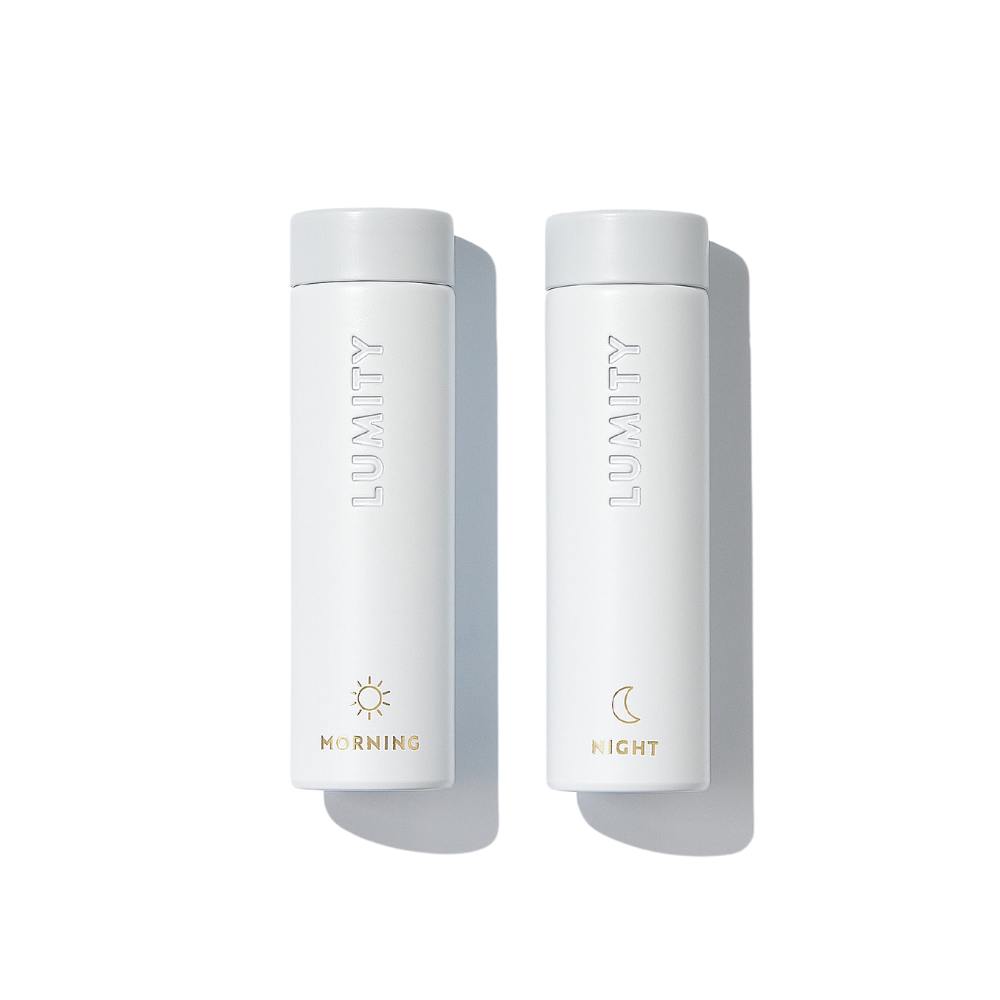
Our distinctive Morning & Night approach is designed around the body's natural daily rhythms, delivering two complementary nutrient formulations. The combined regimen was evaluated in our clinical trial, with positive findings across skin appearance and participant-reported wellbeing (Draelos, 2019).
References
Advertising Standards Authority (ASA) (n.d.) Food: Health claims. Available at: https://www.asa.org.uk/advice-online/food-health-claims.html (Accessed: 25 November 2026).
Chalmers, R. (2025) ‘Introducing our most advanced formula to date’, Lumity Life, 10 April. Available at: https://lumitylife.co.uk/blogs/news/introducing-our-most-advanced-formula-to-date (Accessed: 25 November 2026).
Department of Health and Social Care (2026) Great Britain nutrition and health claims (NHC) register. Available at: https://www.gov.uk/government/publications/great-britain-nutrition-and-health-claims-nhc-register (Accessed: 25 November 2026).
Draelos, Z.D. (2019) ‘An oral supplement and the nutrition–skin connection’, Journal of Clinical and Aesthetic Dermatology, 12(7), pp. 13–16. Available at: https://pmc.ncbi.nlm.nih.gov/articles/PMC6715334/ (Accessed: 25 November 2026).
National Institutes of Health, Office of Dietary Supplements (2026) Magnesium: Fact sheet for health professionals. Available at: https://ods.od.nih.gov/factsheets/Magnesium-HealthProfessional/ (Accessed: 25 November 2026).
Pardo, M.R., Garicano Vilar, E., San Mauro Martín, I. and Camina Martín, M.A. (2021) ‘Bioavailability of magnesium food supplements: A systematic review’, Nutrition, 89, 111294. Available at: https://doi.org/10.1016/j.nut.2021.111294.
Schulz, K.F., Altman, D.G. and Moher, D. (2010) ‘CONSORT 2010 statement: Updated guidelines for reporting parallel group randomised trials’, BMJ, 340, c332. Available at: https://doi.org/10.1136/bmj.c332.
Walker, A.F., Marakis, G., Christie, S. and Byng, M. (2003) ‘Mg citrate found more bioavailable than other Mg preparations in a randomised, double-blind study’, Magnesium Research, 16(3), pp. 183–191. Available at: https://pubmed.ncbi.nlm.nih.gov/14596323/.
Read more

From Vitamin C to Omega 3: What the Science Says About Each Ingredient in Lumity Morning & Night
What does the science really say about Lumity Morning & Night? We examine the research behind its key ingredients, from Vitamin C and CoQ10 to Magnesium and Omega 3, alongside Lumity’s placebo-...
Read more