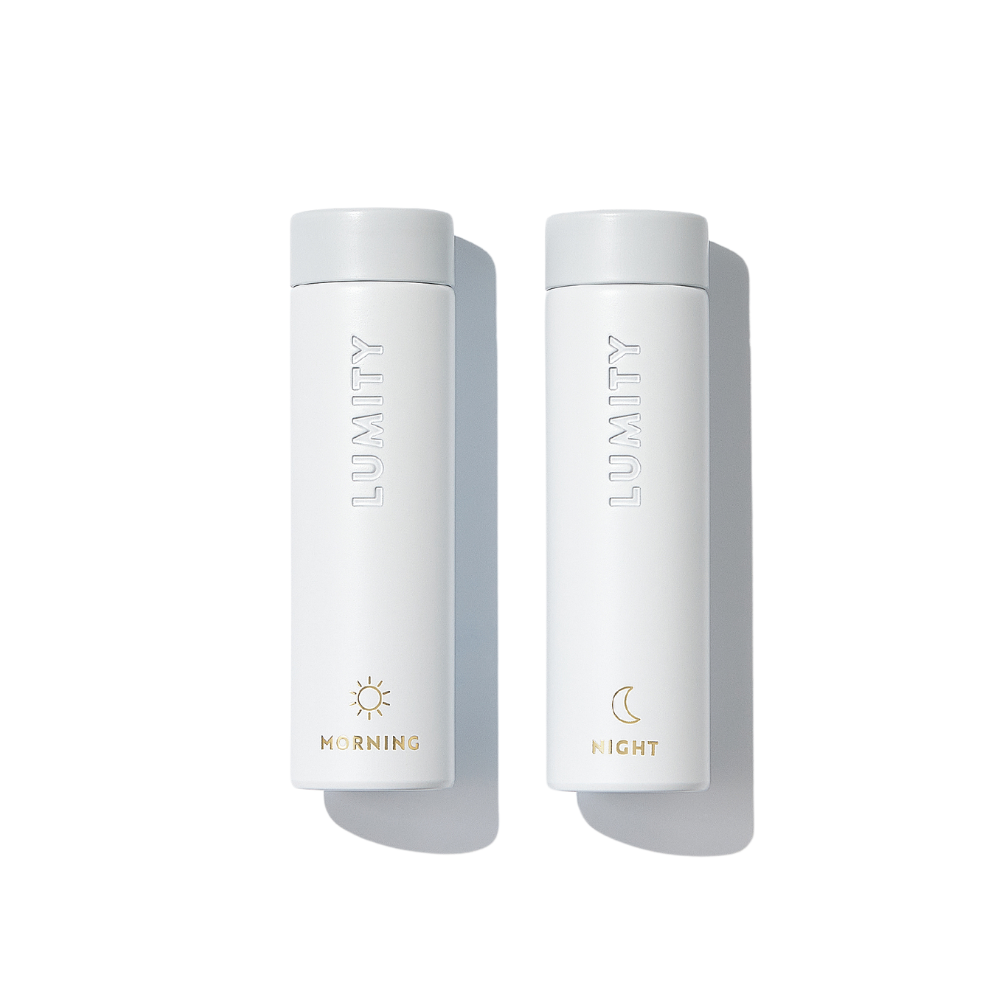
The intervention’s design reflects principles of chrononutrition:
Morning (defensive / metabolic phase):
- Antioxidants mitigate reactive oxygen species (ROS)
- CoQ10 and acetyl-L-carnitine support ATP production and cellular energy
Evening (repair / regenerative phase):
- Nutrients align with collagen synthesis, cellular repair, and immune modulation
- Support for processes amplified during sleep (e.g., growth hormone release, DNA repair)
This temporal targeting enhances biological efficiency – delivering nutrients when the body is primed to use them.
An excerpt from the study summarizes the unique benefit of our Morning supplement, designed to support cellular defence and energy:
“The morning formulation contained vitamin A, vitamin C , and vitamin E , which are important systemic and skin antioxidant vitamins. Vitamin D was also present for bone health and emotional well-being. The morning supplement also contained other trace nutrients, including iodine for thyroid health , the antioxidant ingredient selenium), and magnesium and zinc, which are found in matrix metalloproteinases. Flaxseed oil (1gm) was included as a phytoestrogen and a source of essential fatty acids (omega-3 and omega-6). Other antioxidant nutrients included l-cysteine and turmeric extract. Finally, the morning contained acetyl-l-carnitine and coenzyme Q10, which are important in cellular energy production. Acetyl-l-carnitine and coenzyme Q10 have been used in mature adults to decrease physical fatigue.”
And our Night supplement, designed to support cellular recovery and repair overnight:
“The night supplement was a different formulation designed to meet the needs of a body at rest.
It contained additional flaxseed oil, a phytoestrogen helpful in menopause-induced hot flashes, and l-cysteine. A variety of amino acids, such as lysine hydrochloride, l-glutamine, and l-arginine were also included. This combination of amino acids is purported to stimulate the pituitary gland to produce human growth hormone. Finally, alanine was incorporated for its ability to increase carnosine levels, which are important in glycation interference.”